Ink, Paper, Rock - Solo Exhibition by Kevin Pang
Main Gallery Exhibition
December 4th, 2026 - January 27th, 2027
Opening Reception
December 4th - 5pm - 8pm
Gallery Hours after Opening
Mondays-Fridays 9am - 5pm
Saturdays 11am - 3pm
Construction, construct, structure, destruct, instruct, construe, misconstrue.
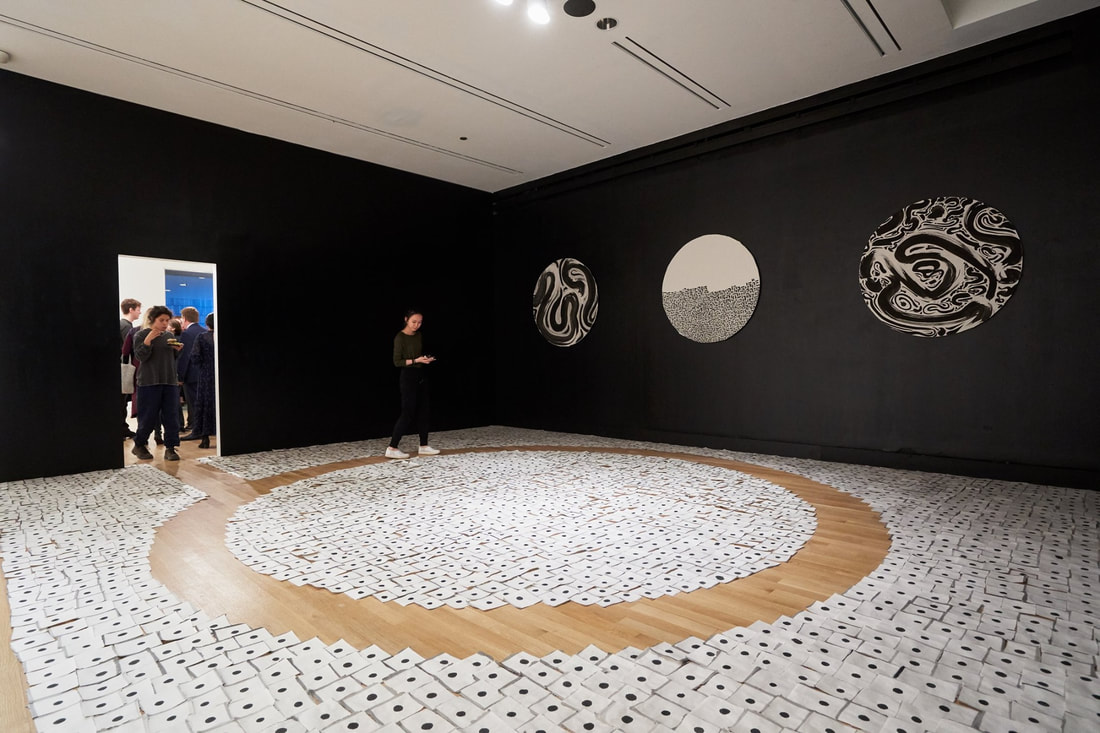
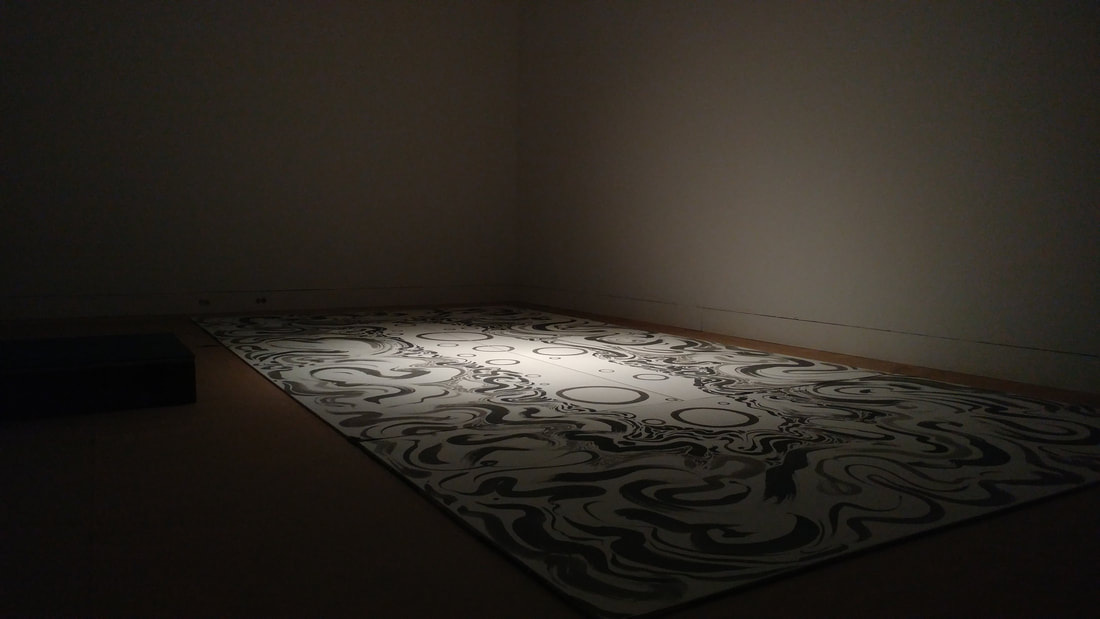
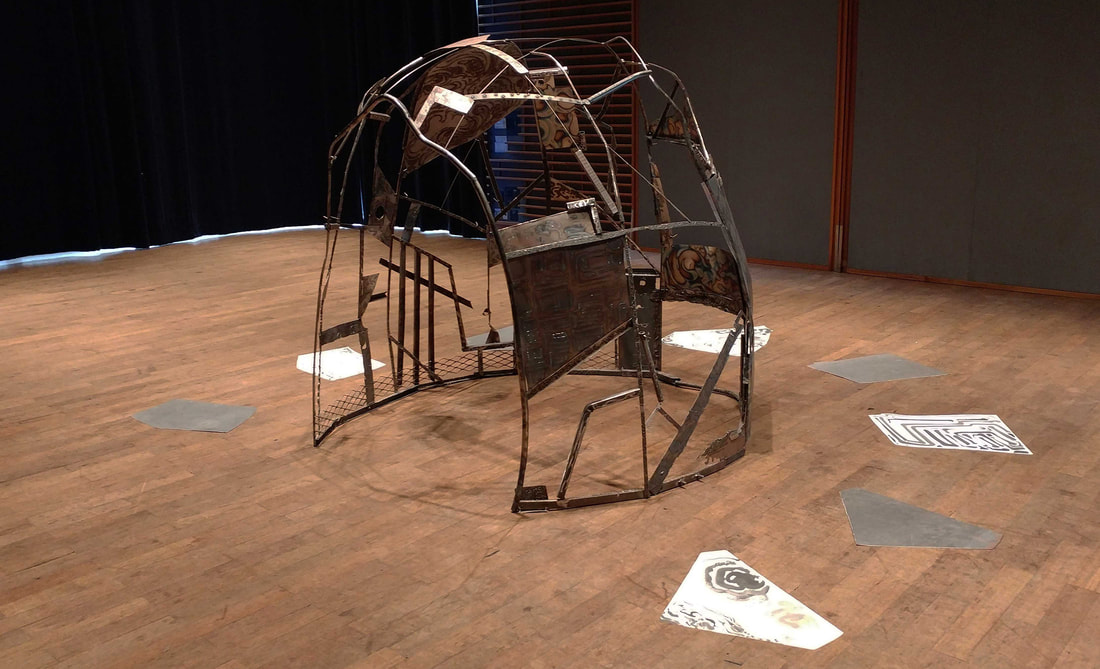
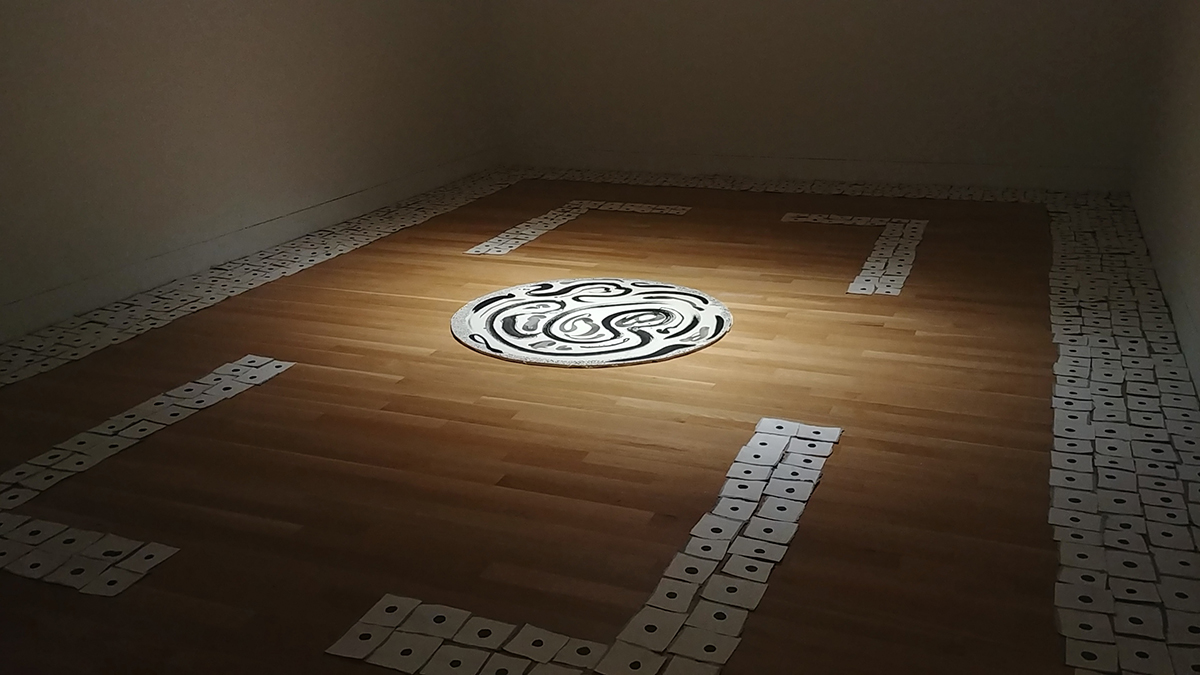
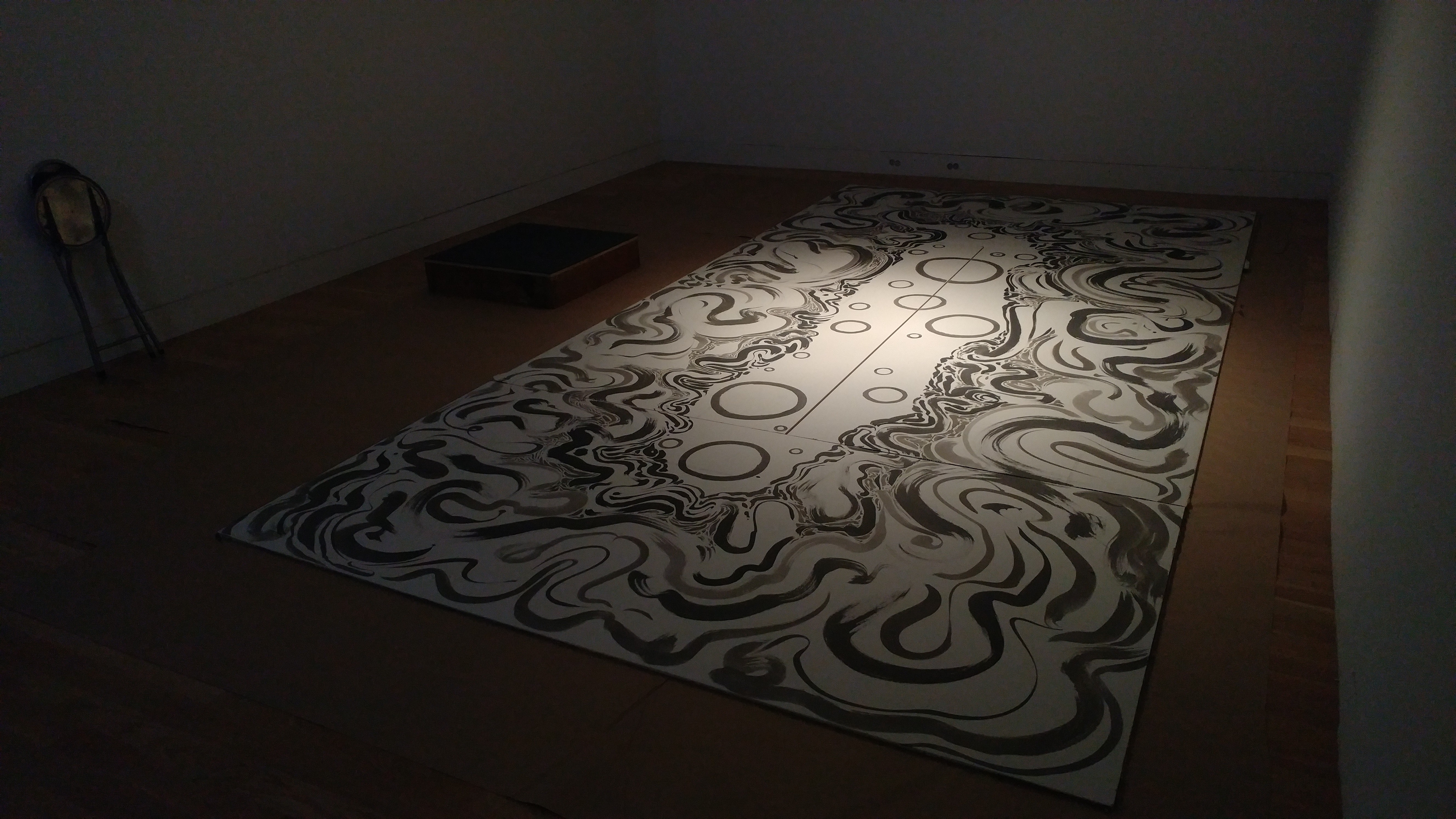
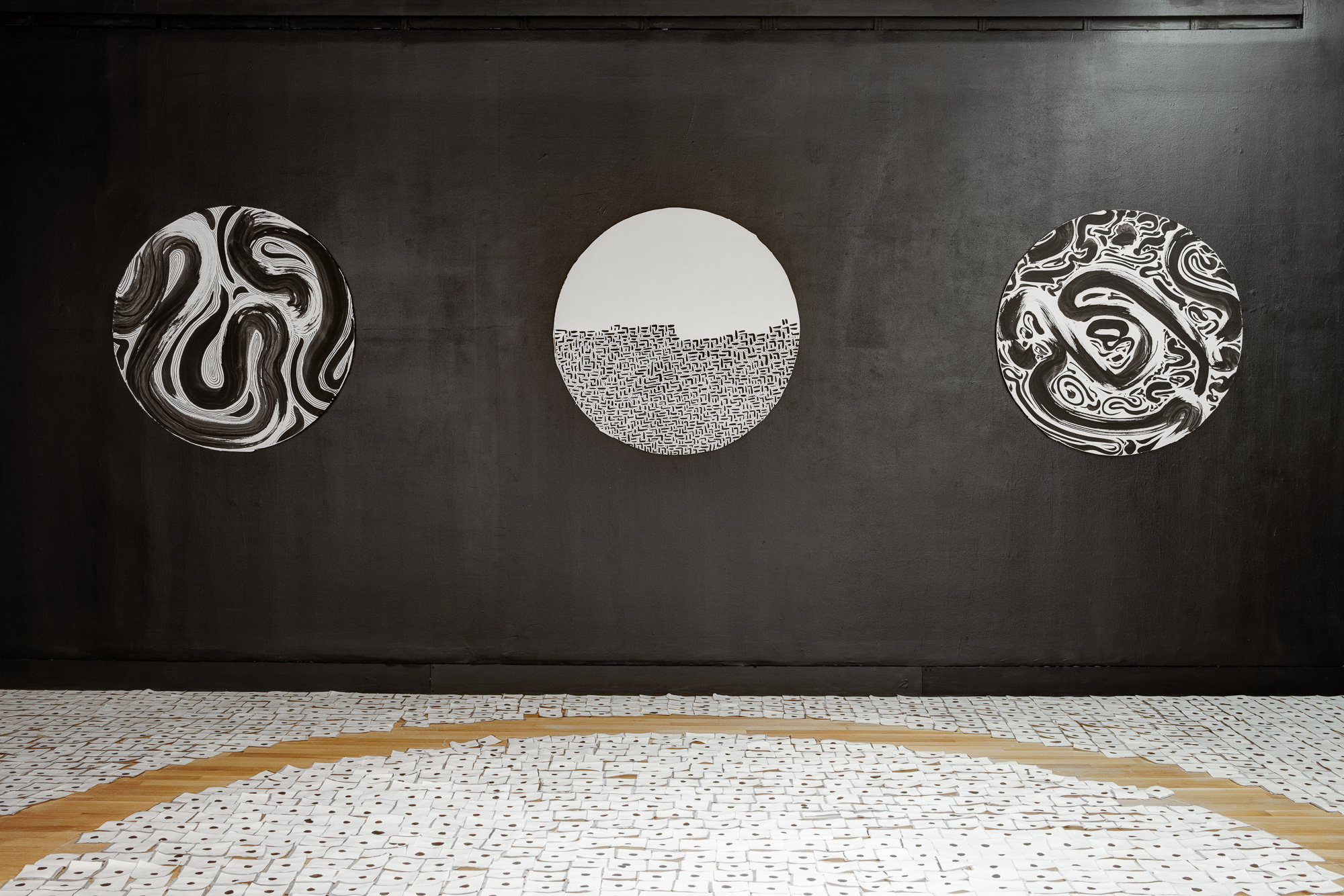
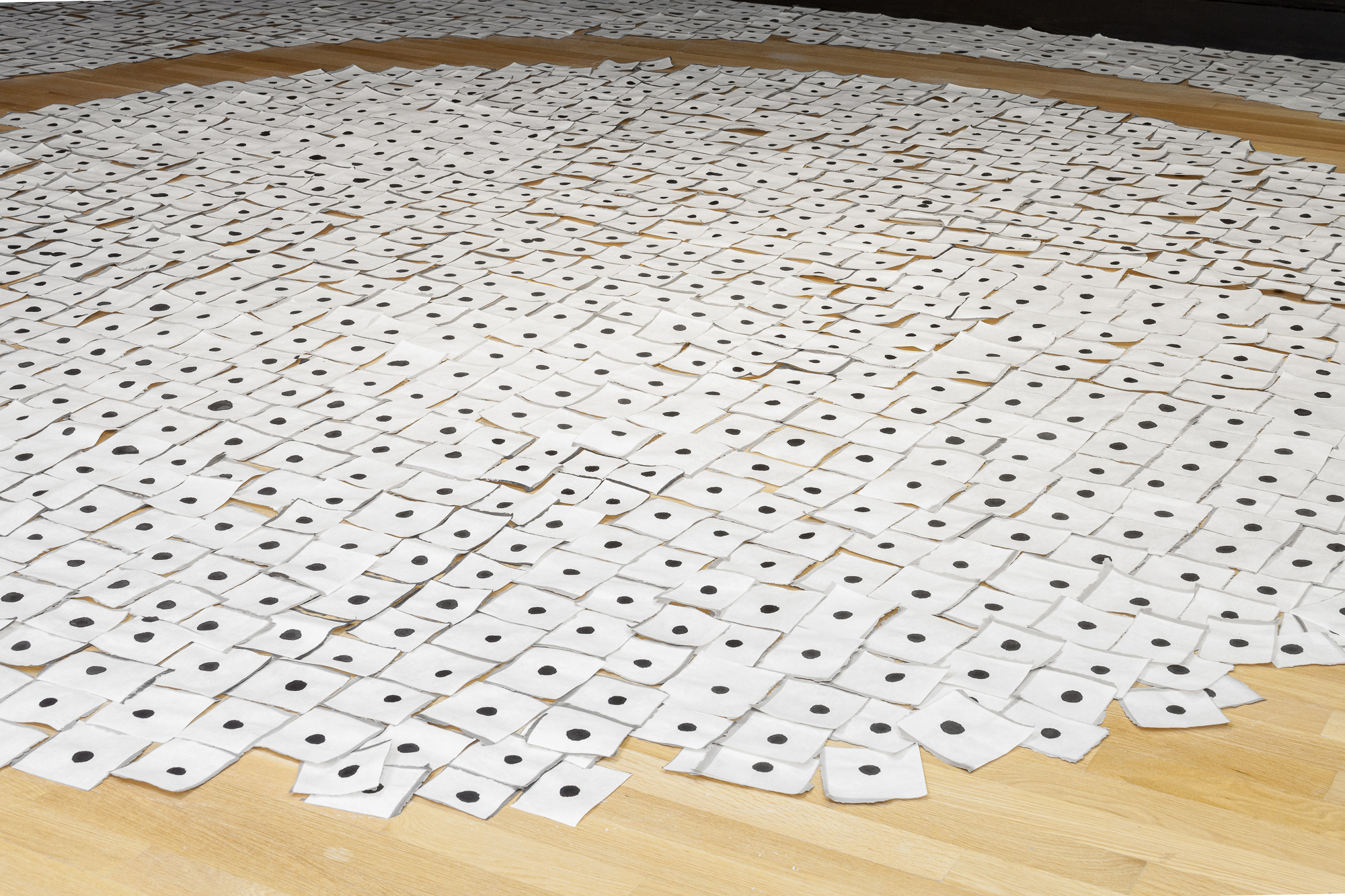
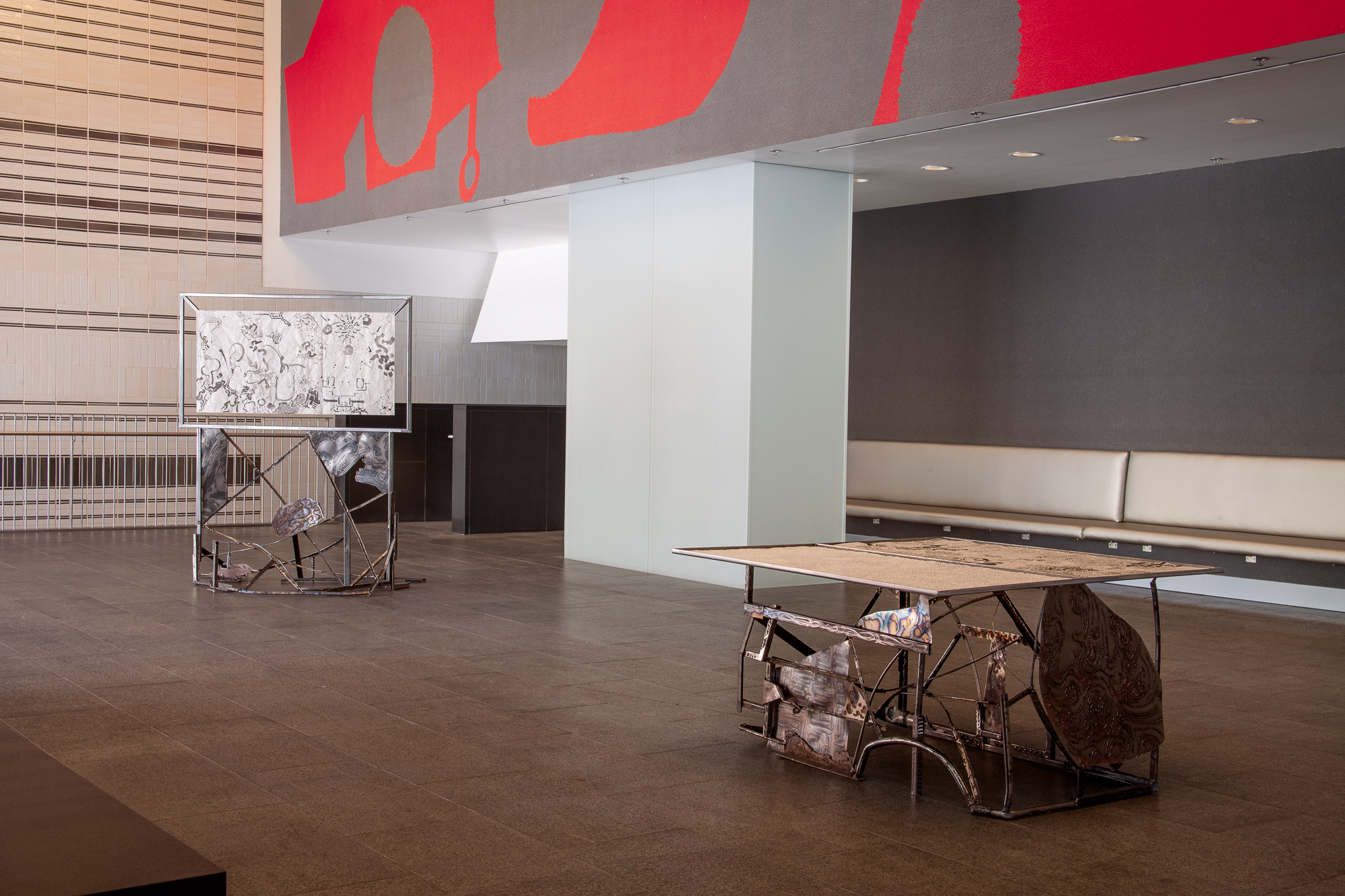
Ink, Paper, Rock marks Kevin Pang’s first solo exhibition in his hometown of Greenville, South Carolina. Bringing together ink, paper, and construction materials, Pang creates a large-scale abstract installation informed by his relationship to place, material, and familiar surroundings.
Developed on-site for GCCA’s Main Gallery, Pang’s installation responds to the gallery space through the arrangement of materials in unexpected ways. The installation will take shape through an evolving process of arranging, assembling, and reconfiguring materials in response to the space. Rather than presenting individual works in isolation, Pang considers the gallery as a whole, allowing the artwork to emerge through its relationship with the surrounding space.
Drawing from his years-long exploration of mark-making, Pang contemplates how gesture, material, and structure give form to otherwise intangible experiences. Through the interplay of expressive marks and physical materials, familiar objects take on new relationships to one another.
Visitors are invited to move through the installation and consider their own relationship to the space, the materials, and the environments in our everyday life.
Kevin Pang
Artist Information
Biography
BFA - University of Washington Seattle
MFA - The University of Chicago
Pang’s approach is shaped by his personal experience of navigating two cultures. Born in Greenville, SC to a Chinese father and an American mother, he has spent much of his life exploring the relationship between these backgrounds. He received his bachelor’s degree in Painting and Drawing from the University of Washington in Seattle before moving to China, where he spent three years studying and traveling throughout the country and other parts of Asia. After returning to the United States, he earned his Master of Fine Arts degree from the University of Chicago. He has just recently moved back to Upstate, SC. His work draws from traditional Chinese brush painting and tools, as well as ideas from Western philosophy and geometry.
Artist Statement
"KNOWING THAT “DOING” TAKES TIME does not help us understand what is being done, where, how, why, and with what. As one does not dismiss significant work because it is of another time, neither does one understand a particular work through time. Endeavor is not justified by knowing that we endeavor in time.
When emphasis is shifted from the thing itself (the work) to time, one loses grasp of what is at hand, which is experience. Experience, in this context, is that which teaches, qualifies, and embraces.Time is a constituent factor in the conception and making of a work, but it is relative. The making of a work is tied to other factors: intention, intuition, materiality, and process. These factors must exist for the realization of any creative work at any time.
Within the process of making, the constituent factors that allow for the realization of a work are not linear in time or nature, but are accumulative. This accumulated experience is very much an individual reality, and it creates a position of knowing, questioning, and reason from which artistic activity can proceed” - Denzil Hurley “About Making”; Perspecta: The Yale Architectural Journal, Volume 19 (1982).
We constantly make choices that determine our path. These choices, and the emotions that accompany them, manifest themselves in mysterious, abstract ways. These abstract manifestations become concrete through the act of creating. Each movement we make takes the abstract sensibilities and gives them a visual representation.
The brush has the unique ability to record even the most minute movement and provide a definition or journal for our abstract self. The memory can be overloaded by day-to-day stresses and complexities. Without a visual or concrete definition of our abstract self, tracking our unique inner pattern becomes more difficult. It is helpful to learn our own inner language in order to navigate our own minds and the physical world.
The first passage is from my late professor. I’m honored to have my first solo show at GCCA in Greenville, SC - my home town.
-kevin pang