
Image via Freepik
Guest Post by Anya Willis
Hobbies are the quiet architects of joy — they fill our hours with purpose, color, and self-expression. Whether it’s painting a sunrise, coding a tiny game, or perfecting your tennis serve, each pastime sharpens the mind, softens stress, and connects us back to curiosity.
The Gist
Hobbies fuel mental clarity, creativity, and social connection. This guide explores creative, physical, intellectual, and lifestyle hobbies — how to start them, what they offer, and why they matter more than ever.
Creative Hobbies: Making the Invisible Visible
There’s something primal about shaping something from nothing. Painting, photography, music, or creative writing — each hobby is an act of translation between imagination and the tangible.
Starter Steps
Begin with low-pressure mediums like sketch journaling or smartphone photography.
Use free tools like Canva or Soundtrap to explore digital creativity.
Join local or online creative communities — Reddit’s /r/ArtFundamentals or Skillshare classes are easy starting points.
Why It Matters: Creative pursuits develop patience, emotional regulation, and problem-solving — the very skills that enhance workplace adaptability.
Hobby Archetypes & Their Benefits
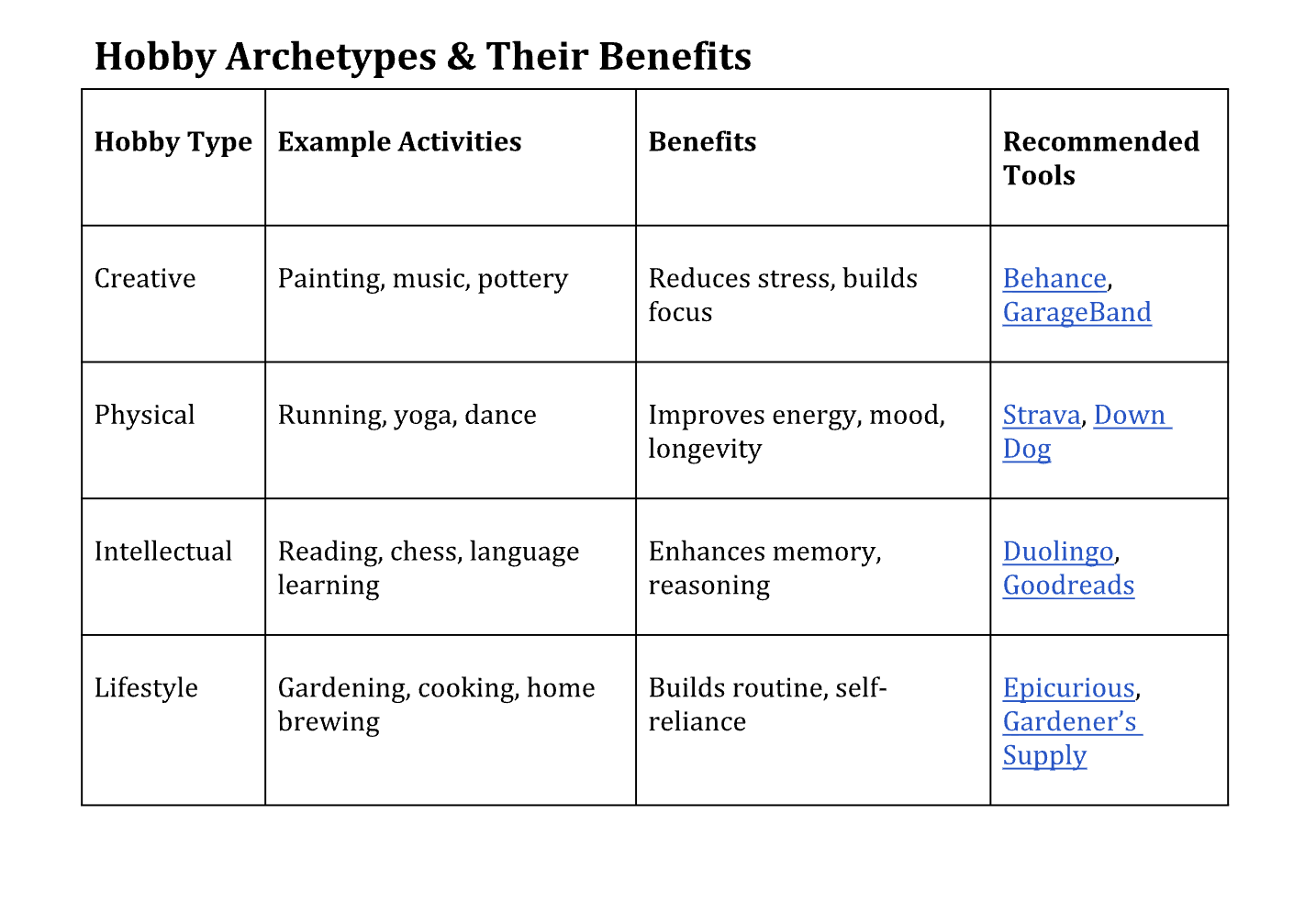 * Tool Links at the end of the article *
Physical Hobbies: Moving Toward Energy and Ease
You don’t have to run marathons to reap the benefits. Walking clubs, yoga, cycling, or recreational sports provide both rhythm and reset.
Choose something low-impact first (e.g., swimming or hiking).
Commit to frequency over intensity — 15 minutes daily beats one hour weekly.
Track progress with an app like Fitbit.
Reward yourself with rest, not guilt.
Result: Improved mental clarity and reduced anxiety — movement becomes meditation in disguise.
Intellectual Hobbies: Feeding the Mind, Not Just the Calendar
For some, joy comes from inquiry — the delight of finding patterns, reading philosophy, or learning a new language.
Start small: a crossword at breakfast, a history podcast on your commute, or an online debate forum.
Beginner Tip: Try joining Coursera or Khan Academy for short, guided learning bursts. A hobby that feeds your intellect strengthens long-term memory and cognitive agility.
Lifestyle Hobbies: Grounding Joy in Everyday Rituals
Lifestyle hobbies remind us that small, repeated acts of care are forms of artistry — cooking, gardening, or DIY repair. They bring satisfaction in tactile feedback: flavor, soil, texture, and growth.
Try This Mini Experiment:
Grow one herb (basil is forgiving).
Cook one new recipe weekly.
Reflect on how tactile tasks affect your focus.
Over time, such micro-habits build mindfulness and presence — traits often lost in digital environments.
When Passion Becomes Profession
Sometimes, a pastime grows into a calling. Many find new purpose — and even a career —in the craft they once practiced on weekends. Whether it’s photography, coding, or culinary art, turning your hobby into a career often involves formal learning or skill deepening. If that spark hits you, consider going back to school to transform it into a sustainable path. For those launching their own ventures, earning a business management degree can strengthen leadership, operations, and project management skills — essential for scaling passion into practice (check this out). Online degrees, in particular, offer the flexibility to learn while you build.
Spotlight Product: The Everyday Journal
Before you scroll past — consider the humble journal. Tools like the Moleskine Classic Notebook can act as a creative compass, mood tracker, and goal map. Many find that journaling turns scattered interests into meaningful patterns, linking mind and hobby seamlessly.
FAQ: Common Hobby Questions
Q1: How much time should I spend on a hobby?
A: Even 10 minutes a day is enough to establish consistency — focus on rhythm, not duration.
Q2: What if I’m not “good” at anything?
A: Skill is the result of enjoyment, not its precondition. The joy of the process matters most.
Q3: How do I balance multiple hobbies?
A: Rotate by season or mood. Let curiosity, not guilt, set your pace.
Q4: Can hobbies really reduce burnout?
A: Yes. Studies link leisure flow states to better resilience, lowered cortisol, and higher workplace satisfaction.
Hobbies aren’t just distractions — they’re the syntax of joy. In a world built on optimization, hobbies remind us that time spent “unproductively” can be the most productive of all. Whether you’re learning, lifting, writing, or wandering — it’s the act of engaging that makes life vivid. So, pick one. Start small. Repeat often. Your future self will thank you.
Tool Links:
https://www.behance.net/
https://www.apple.com/mac/garageband/
https://www.strava.com/
https://www.downdogapp.com/
https://www.duolingo.com/
https://www.goodreads.com/
https://www.epicurious.com/
https://www.gardeners.com/